— By Dr. J.P Varshney

Detection of a small hard bug in your pet’s fur is a common thing It is a tick – the deadliest enemy of your furry friend. Find out how to control tick infestations and keep your pet safe and healthy.
It seems there is no particular season when ticks are found on the pet’s body. Ticks are proliferating throughout the year in different eco-climatic zones, posing a threat to both human and animal health. The apparent changes in climate owing to global warming has facilitated the proliferation and spread of ticks to even colder regions. The presence of ticks on pets is not only an unpleasant sight but also a cause of concern, as they are the vector for transmitting many diseases.
What are ticks?
Ticks are blood-sucking ectoparasites that are easily seen on dogs’ bodies with the naked eye. They are of two types –
- Hard (Ixodidae) ticks
- Soft (Argasidae) ticks
They attach themselves to the skin of your pet. They are generally found in damp areas of thick vegetation cover and attach to dogs when they go to these areas for urination and/or defecation, and feed themselves by sucking the blood and then drop off.
The common areas for ticks are –
- Head
- Outer and inner side of the ear pinnae
- Legs (both inner and outer sides)
- Paws
- Abdomen or pelvic region
Why worry about ticks?
Tick infestation is a cause of real worry because they can transmit a variety of diseases such as Lyme disease, Rocky Mountain fever, Babesiosis, Ehrlichiosis, Hepatozoonosis, Haemobartonellosis, Tick paralysis etc. It has been estimated that ticks can ingest 0.4 g of blood on average. This may lead to a deficiency of blood (anaemia) in puppies.
Red Flags You Shouldn’t Ignore
Tick- borne infections are manifested by varied symptoms. The most common are –
- Weakness and lethargy
- Loss of appetite
- Blood deficiency or anaemia
- Diarrhea and vomiting
- Increased salivation and panting
- Swelling of the limbs
- Nasal bleeding
Chronic infections lead to emaciation. Sudden death can also happen in extreme cases.
Fur, Fear, and Freedom from Ticks
Ticks can be controlled if a proper and adequate strategy is adopted. As disease transmission usually takes 24-48 hours after attachment of the ticks, their immediate removal is warranted to avoid the occurrence of the disease. Various ‘spot-on’ formulations, collars, and sprays are readily available in the market that are effective at removing ticks if used properly. Sometimes toxicities of these products are also seen. Pets may show vomiting, diarrhea, trembling, seizures, and respiratory problems. If such symptoms are noticed after application of anti-tick formulations, wash your pet immediately to reduce the quantity of the product on the body and immediately take him to the vet.
Ticks can be controlled by simultaneous control in the surroundings and on the animal.
Breaking the Tick Lifecycle Around You
Tick control in the environment, i.e., kennels, yards, may be undertaken by spraying these areas with medicated sprays on a weekly or fortnightly basis. Ticks are not killed even in cold weather. However, the number of ticks in the surroundings can be reduced drastically by removing leaves, cutting the grass, and from surroundings of the house and kennel. Brown dog ticks can crawl on the walls and can migrate to crevices; hence, it is very troublesome to control their population. A regular spraying with anti-tick solutions is needed.
Your Pet’s Shield Against Ticks
Today, many anti-tick topical products, ranging from sprays, powders, dips, shampoos, and collars, are available for controlling ticks on your pet. However, they should be used judiciously with care.
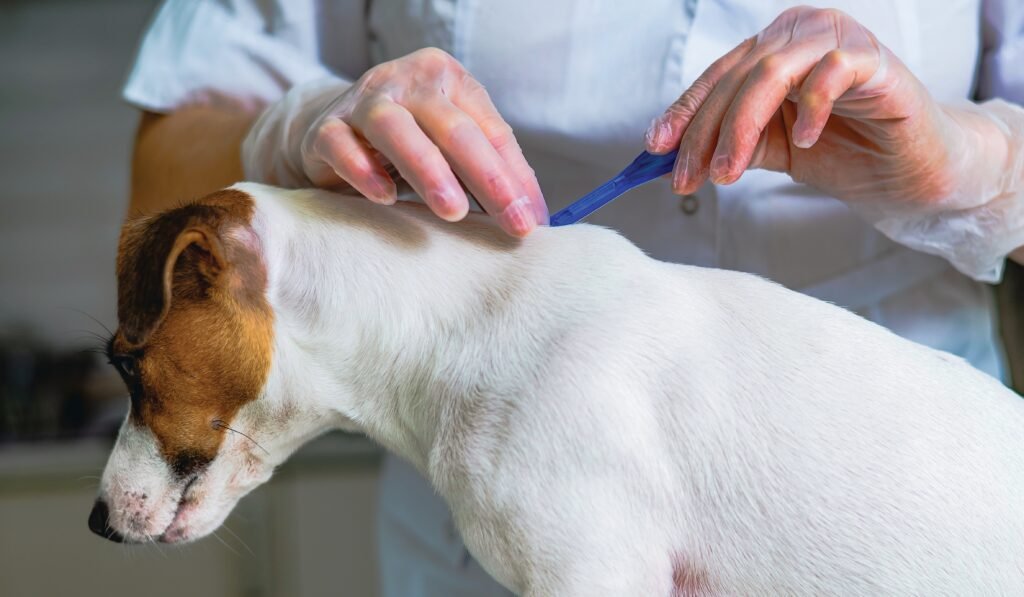
Pour on Topicals: Topicals containing permethrin, pyrethrin, or fipronil are available that are used once a month. These products are applied to a small area on the back of the dog. Some products kill fleas, other both fleas and ticks
Sprays: Sprays containing fipronil, fipronil + (s) methoprene, and propoxur are in the form of aerosols or pump bottles. They are ready to use. All the parts of the body need to be sprayed. On the ears and around the eyes, these products should not be sprayed but may be applied with a small cotton ball. It is advisable that sprays are done in an open area.
Powders: Powders are also available for topical application. They are also easy to apply, but should not be used in pets with allergic bronchitis. Like sprays, powders are also to be used in open areas.
Dips and Rinses: Permethrin, pyrethrin or organophosphate solutions for dips or rinses may also be used. In this form, they cover the whole body and have some residual activity. Ears and eyes need protection that can be achieved by putting cotton plugs in the ears and applying eye ointment in the eyes before rinsing or dipping.
Shampoos: Shampoos containing these basic drugs are available in the market in different brand names. They need to be worked out on the whole body and left for 30 minutes before washing off the body. Ears and eyes need to be protected in the same manner as described above.
Anti-tick Collars: They are quite effective in preventing ticks and/ or fleas. They should be applied correctly on the neck of your pet, leaving a two-fingers space between the collar and the neck of the animal. They are required to be removed when bathing your pet and tied again after complete drying the body.
Removal of Ticks by Hand
Ticks can be removed from the body by using appropriate tweezers or forceps. Care should be taken not to crush the body of the ticks during removal to avoid the entrance of the infection/ organisms into the body. Removed ticks should be collected in a jar containing alcohol or kerosene and should be finally burnt. Make sure you wash your hands thoroughly with an antiseptic solution after this process.
Ticks are quite common, especially in our hot and humid climate. Don’t panic! When you see one, contact your vet and get the right prevention and treatment methods started.
(Prof. Dr J.P. Varshney, M.V.Sc, Ph.D (Medicine), Retired Professor, is currently engaged as Senior Consultant (Medicine) at Nandini Veterinary Hospital, Surat.)