CT Imaging is not just about a complex machine, but as a powerful tool that helps veterinarians make accurate decisions — and helps pet parents move forward with clarity and confidence.
— By Dr. Chetanya Walia and Dr. Diva Dhingra
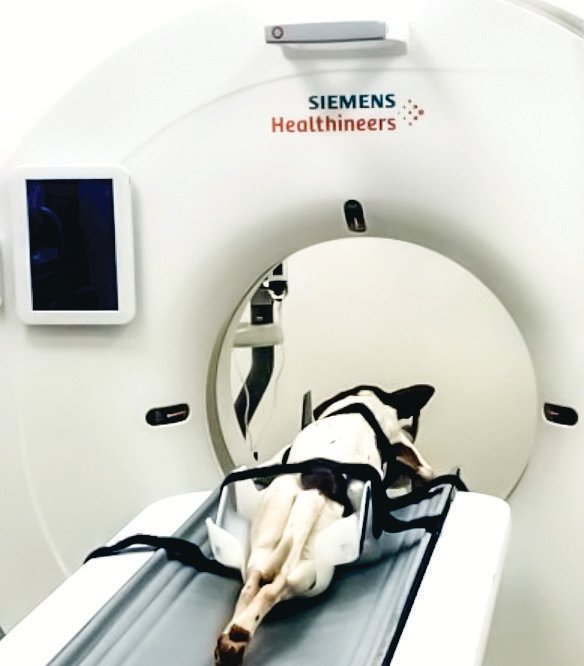
Every pet parent knows their pet better than anyone else. You notice the small changes first — a limp that does not improve, breathing that seems laboured, repeated sneezing, loss of appetite, seizures, or a sudden behaviour change. Often, routine tests such as blood work, X-rays, or ultrasound are performed, yet the cause remains unclear. This uncertainty is one of the most stressful moments for a pet parent. You want answers, not guesses. You want to know what is happening inside your furry friend’s body and what can be done to help. This is where CT (Computed Tomography) imaging plays a vital role in modern veterinary care.
What is a CT scan?
A CT scan is a special type of imaging that allows veterinarians to see inside your pet’s body in great detail. Unlike regular X-rays, which produce a 2-dimensional image, a CT scan takes many thin images — or “slices” — of the body. These slices are then combined by advanced software to create detailed 3D images.
This means the veterinarian can look at organs, bones, lungs, brain, and soft tissues in a detailed, cross-sectional manner. When needed, a contrast injection is used to highlight blood vessels, tumours, or areas of inflammation, making problems easier to identify. Simply put, CT helps your veterinarian see what cannot be seen clearly with other tests.
Why Your Veterinarian May Recommend a CT scan?
After an Accident or Injury
If a dog has been hit by a vehicle or suffered a serious fall, injuries may be more complex than they appear on X-rays. CT scans clearly show hidden fractures, joint damage, and internal injuries. This allows surgeons to plan treatment properly before surgery, reducing complications and recovery time.
When Cancer Is Suspected
Hearing the word “cancer” is frightening for any pet parent. CT scans help veterinarians locate tumours, understand how large they are, and determine whether the disease has spread — especially to the lungs or lymph nodes. This information is essential for deciding whether surgery, chemotherapy, radiation, or palliative care is the best option.
For Brain and Spine Problems
Signs such as seizures, paralysis, head tilt, or severe back pain require precise diagnosis. CT scans can help identify brain masses, bleeding, skull fractures, spinal disc disease, and compression of the spinal cord — often quickly, which is crucial in emergencies.
Breathing Problems and Thoracic Disease
CT is far more sensitive than X-rays in detecting lung disease. Small lung nodules, subtle pleural effusions, and thoracic masses can be identified early. For pets with chronic cough or breathing difficulty, this clarity can be life-saving.
Dental and Jaw Disease
Many dental problems occur below the gum line and remain invisible on routine exams. CT scans reveal tooth root infections, jawbone disease, and fractures. This allows safer dental surgery and prevents recurring pain or infection.
How CT Helps Before Surgery — And Why That Matters to You?
One of the biggest advantages of CT imaging is surgical planning. By seeing the problem clearly before surgery, veterinarians can choose the safest approach, anticipate challenges, and reduce time under anaesthesia.
In many cases, CT allows surgeons to remove tumours more completely, stabilise fractures more precisely, and avoid unnecessary exploration. For pet parents, this means better outcomes, fewer complications, and faster recovery.
Is a CT scan Safe for your Furry Friend?
This is one of the most common questions pet parents ask — and rightly so.
CT scans themselves are painless. To ensure your pet stays perfectly still during the scan, short general anaesthesia or deep sedation is usually required. Modern anaesthesia protocols, careful monitoring, and experienced veterinary teams make this process very safe, even for older or ill dogs. Radiation exposure during diagnostic CT is low and controlled. When a CT scan is recommended, the benefit of accurate diagnosis far outweighs the minimal risk.
Understanding the Cost – Value Over Guesswork
While CT scans are more expensive than routine imaging, they often save money in the long run. Without clear answers, pets may undergo repeated tests, ineffective treatments, or surgeries that do not fully address the problem. A single CT scan can provide a clear diagnosis, guide the correct treatment, and avoid weeks of uncertainty. For many pet parents, this clarity is invaluable.
What to Expect on the Day of the Scan?
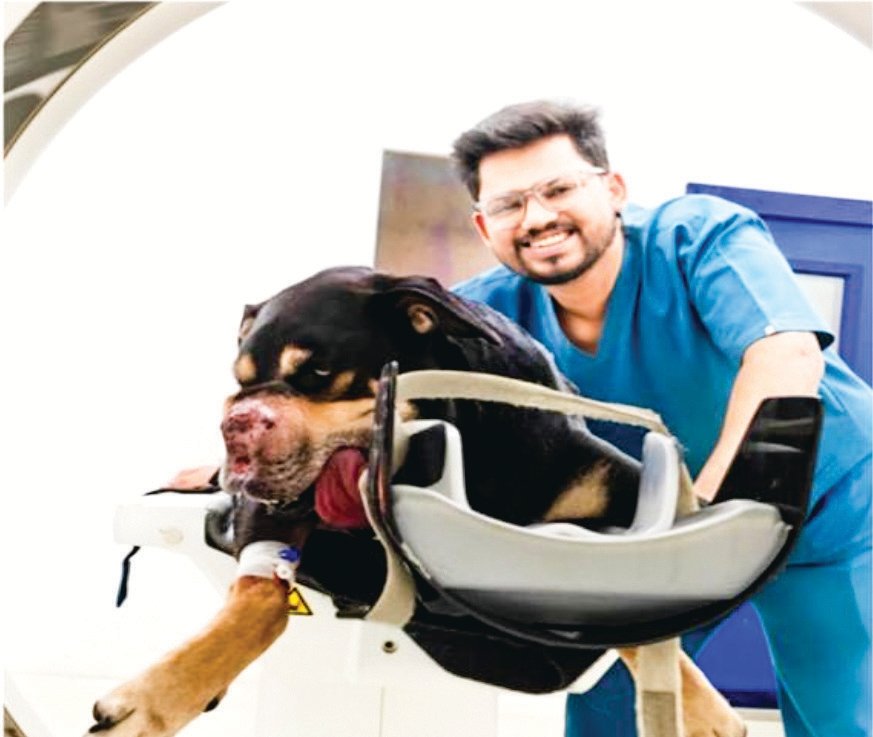
Most dogs need to fast for 6-8 hours before the scan. Your veterinarian will advise you about medications and preparation. The scan itself is quick, and most pets go home the same day. Recovery from anaesthesia is usually smooth, and normal activity can resume shortly afterward unless otherwise advised.
Veterinary medicine continues to advance, and imaging technology is a major part of that progress. CT scans allow earlier diagnosis, safer surgeries, and more confident treatment decisions. For pet parents, CT offers something priceless — understanding. When you know what is happening inside your pet’s body, you can make informed choices rooted in compassion, clarity, and trust. At Fredna Vet Diagnostics, our commitment is to help veterinarians see more — so together, we can do more for the lives entrusted to our care.
(Dr. Diva Dhingra and Dr. Chetanya Walia – Fredna Vet Diagnostics, Mumbai. Fredna Vet Diagnostics, provides precise and timely diagnostic services to ensure the best care for pets. Expert team and advanced technology are dedicated to improving animal health.)