

Keeping your pet indoors during summer does provide some respite, but it is not a permanent solution. As a pet parent, you need to take some extra measures to take care of the health and well-being of your pet.
Unlike humans, who have a large number of sweat glands, dogs have a limited number of primary sweat glands in their paw pads and regulate their breathing through panting. This makes them more susceptible to heat strokes.
Heat Stroke Red Flags
Heat strokes are a veterinary emergency, and thus it is important to recognise their signs. It occurs when your pet’s body temperature rises above 40°C (104°F).
Most common symptoms –
- Excessive/ Laboured panting
- Drooling and Excessive salivation
- Disorientation
- Vomiting and Diarrhea
- Seizures
Immediate action should be taken. Move your pet to a cool area and wet their coat with cool water (do not use ice or ice water). Make sure the area is cool and well-ventilated with a fan or AC. Take your pet to the vet for further treatment.
Tiny Pests, Big Problems
Warm weather accelerates the life cycle of fleas and ticks, causing a surge in tick fever (Ehrlichiosis, Babesiosis) and flea allergy dermatitis.
- Prophylaxis/ management: Use vet-approved spot-on treatment, oral tablets, or medicated collars.
- Environmental control should be done by regularly cleaning bedding, or the outside areas can be treated against ectoparasites.
- Daily checks should be done during the grooming session to find these ticks and fleas.
Hydration is Most Important
Water is not only a basic need but also a necessity during peak summer. Lots of moisture is lost during constant panting by your pet.
- Water should be available at all times and within reach.
- Some pets get lazy or avoid drinking water, so water should be kept in every room or nearby their resting place for easy access.
- The water bowls should be cleaned properly and filled with fresh water 2-3 times a day.
- Some ice cubes can be added to the water to encourage drinking cool water. Don’t force- feed ice cubes to your pet if he is already panting.
- Electrolytes can be added to water after consulting with the veterinarian.
Paws on the Move— At the Right Time
Exercise and walks should be avoided during midday sun (11 am to 5 pm) as it can lead to a rise in temperatures.
- During early morning and late evening, the wind is cool, and the temperature is not that hot, which is suitable for walks.
- If it’s too hot to go outside, indoor practices or exercises can be done to give mental and physical stimulation.
- The pavement test – keep the back of your hand on the pavement for 30 seconds. If it’s too hot, that means it is too hot for your pet to walk on.
A Cool Retreat for Hot Days
Keeping your pet cool and protected from heat is one of the priorities of pet parents in the summer. Here’s how you can do it.
- Indoor – The room in which your pet mostly stays should be well ventilated, and fans and air conditioning should be running. Cooling mats can be used to protect from warm floors.
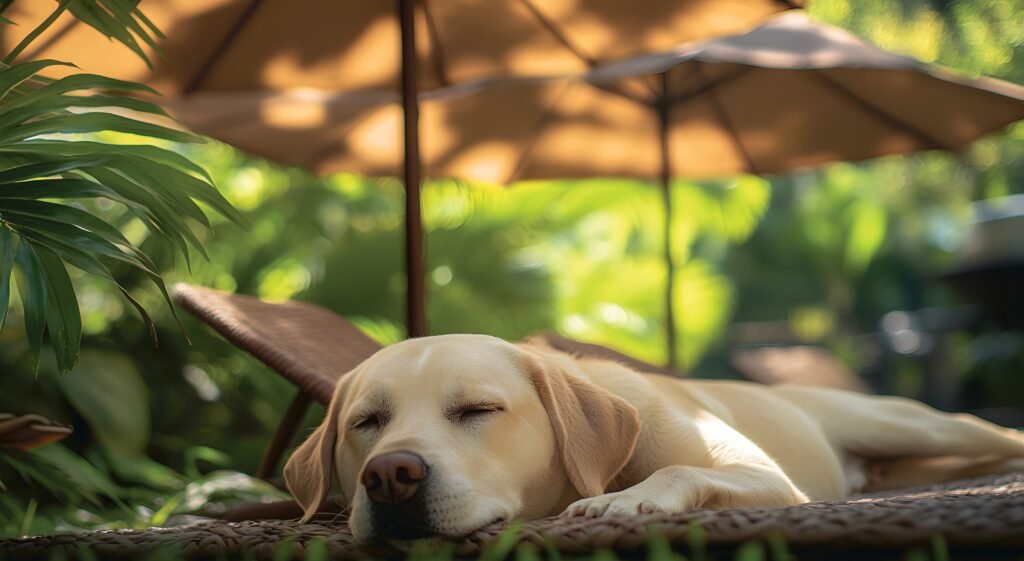
- Outdoor – If your pet likes to stay outdoors, the area should have proper shade. Shade under trees provides proper air flow. No plastic shades should be used, as they trap heat. Wet towels can be used. Make your pet lie on wet/damp towels with their underbelly or paws. Avoid covering your pet with towels, as this can trap heat and raise their body temperature.
Grooming Always Works
You might think shaving your pet might provide them relief from heat, but that’s not true. Their coat acts as insulation against heat and protects them from sunburn. So, no shaving!
- Summer trim can be done instead of a full shave. This also prevents Summer Dermatitis and hot spots (red, moist, itchy lesions), which can also be treated by cleaning the area with a mild antiseptic.
- Daily brushing is a must. It removes dead hair and dirt to provide better air circulation through the coat. And you can also check your pet’s skin for cuts, wounds, and ticks.
- Vet-approved sunscreens can be used on the bridge of the nose and tip of the ears, and especially in short-haired dogs and those with white or pink skin, which is prone to sunburn.
Feeding Smart in Summer Heat
Your pet can have decreased appetite during the rising temperatures of summer, which is a natural response.
- Light meals or meals in small portions can be given frequently.
- Wet food can be incorporated into the diet for proper hydration.
- Frozen treats, plain yogurt, and pieces of watermelon or blueberries turned into little popsicles can be given, which can be enjoyed by your pet.
- Rising temperatures can lead to faster food spoilage, which can cause Canine Enteritis. Hence, wet food should not be kept outside for more than 20-30 minutes, and drinking water should be changed regularly.
In all, as a pet parent, a little extra care and attention can turn this summer joyful and comfortable for your furry friends. Maintaining a proper schedule, prioritising hydration, and understanding their body language will be of great help!
(Navyaa sood, 3rd year BVSc and AH student at RPS veterinary college Combining academics and passion aiming to help pet parents.)