— By Dr. Rutuja Sawant and Dr. Harshal Patil

By the age of three, nearly 80% of dogs show signs of dental disease. What starts as mild plaque buildup can quickly progress to more severe conditions, including gingivitis, periodontal disease, and tooth loss.
Dental disease is not limited to the mouth. Bacteria from infected gums can enter the bloodstream and affect vital organs, such as the heart, liver, and kidneys, potentially turning a simple dental issue into a life-threatening problem.
Common Dental Problems in Pets
- Plaque and Tartar Buildup – Soft plaque hardens into tartar if not removed.
- Gingivitis – Red, swollen, bleeding gums.
- Periodontal Disease– Infection affecting the gums and bone supporting the teeth.
- Tooth Fractures – Common in pets that chew hard objects.
- Oral Infections and Abscesses– Painful and often unnoticed by owners.
Small Changes Could Signal Serious Dental Issues
Pets are experts at hiding pain. Watch out for these warning signs –
- Bad breath (not “normal dog smell”)
- Difficulty in eating or dropping food
- Frequent pawing at the mouth
- Red or bleeding gums
- Yellow or brown deposits on teeth
- Facial swelling
- Reduced appetite or behaviour changes
If you notice any of these, consult your veterinarian at the earliest.
The Importance of Professional Dental Care
Routine veterinary dental examinations and professional dental scaling and polishing are the gold standard for maintaining oral health. These procedures are performed under anaesthesia to ensure a thorough and pain-free cleaning, including below the gum line—where most disease hides.
Your veterinarian may also recommend dental X-rays to detect problems that are invisible to the naked eye, such as root infections or bone loss.
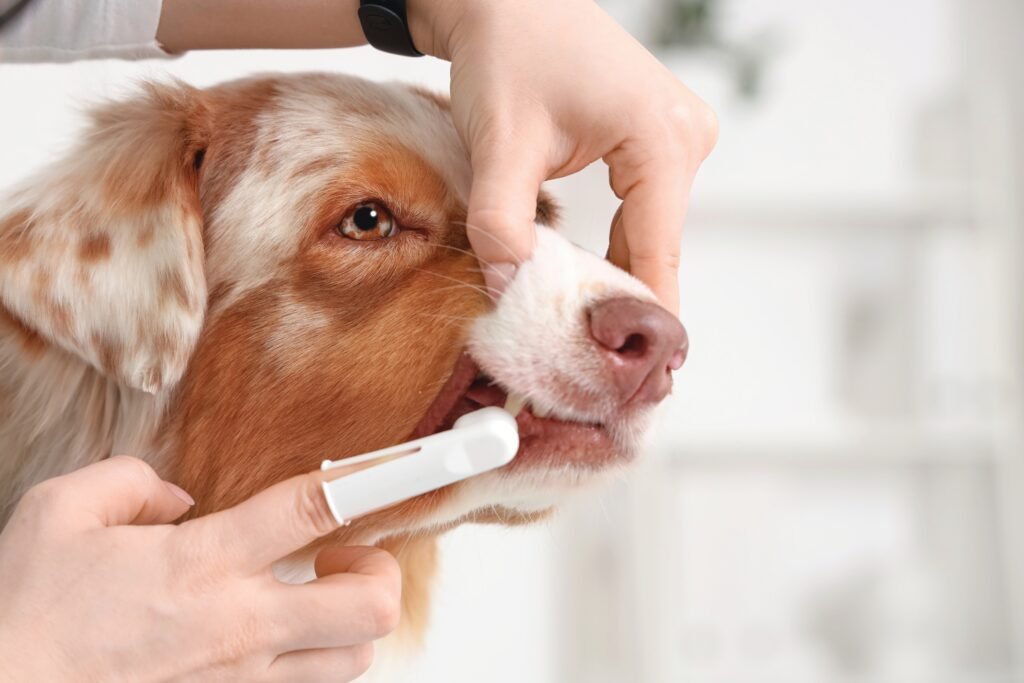
Home Dental Care – Small Efforts, Big Impact
Daily or regular home care can significantly reduce dental disease –
- Brushing teeth with pet-specific toothpaste .
- Dental chews and treats approved by veterinarians.
- Dental diets designed to reduce plaque.
- Oral rinses or gels for pets resistant to brushing.
Consistency is key; even brushing a few times a week makes a difference.
Dental Care Is Preventive Care
Investing in dental health is not just about clean teeth; it’s about preventing pain, infection, and costly treatments in the future. Good oral hygiene improves your pet’s comfort, appetite, behaviour, and overall quality of life.
Dental care in pets is no longer a luxury; it’s a necessity. Regular checkups, timely professional cleaning, and simple home care routines can add years of healthy life to your furry companion.
Because a healthy smile means a healthier heart, happier meals, and more tail wags and purrs every day.